ASCLS Today is the membership newsletter of the American Society for Clinical Laboratory Science.
To submit an article for ASCLS Today, contact Editor Debra Rodahl.
Volume 40 Number 4 | August 2026 Summary The article discusses an innovative educational approach called “Be the IP” designed to enhance frontline staff understanding of specimen collection’s impact on infection prevention, antibiotic use, and patient outcomes in long-term care. This approach engages staff with real-world scenarios and promotes specimen stewardship as a multidisciplinary responsibility.…
Volume 40 Number 4 | August 2026 Summary The author shares his enthusiasm for starting the Doctorate in Clinical Laboratory Science (DCLS) program, emphasizing the role of DCLS in advancing medical laboratory scientists from behind-the-scenes diagnostics to active patient care collaboration; supporting healthcare teams without replacing other providers; and advocating for improved patient outcomes through…
Volume 40 Number 4 | August 2026 Summary Advocacy in laboratory medicine begins in educational settings where educators foster professional pride, understanding of the profession’s impact on healthcare, and leadership skills. With encouragement, students become ambassadors who promote the value of laboratory professionals, participate in recruitment, and engage with the broader professional community to address…
Volume 40 Number 4 | August 2026 Summary The article discusses the critical role of laboratory professionals in healthcare, highlighting challenges such as workforce shortages, burnout, and limited public recognition. The author emphasizes the importance of professional advocacy, interprofessional collaboration, workforce development, and technological support to ensure patient safety and sustain the laboratory medicine workforce.…
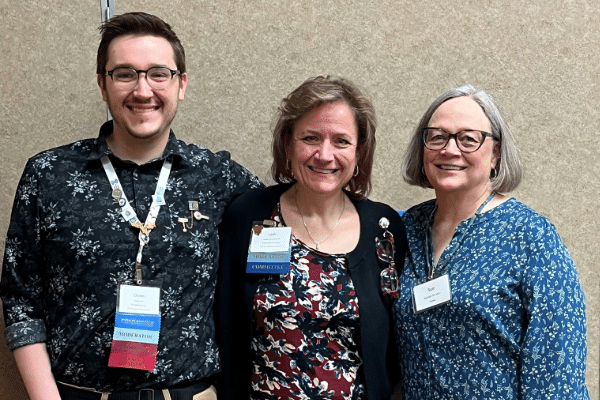
Volume 40 Number 4 | August 2026 Summary The article reflects on a meeting of the ASCLS-Wisconsin scholarship committee where members representing four generations of mentor–mentee leadership lineages shared their commitment to nurturing future leaders. The author highlights the state constituent society’s vibrant, innovative, and mentorship-driven leadership culture that sustains its strength and relevance. A…
Volume 40 Number 3 | June 2026 Summary This article emphasizes that while laboratory professionals have traditionally been defined by work at the bench, the future requires visible, active collaboration across healthcare teams. By embracing interprofessional roles, advancing education, and advocating for broader engagement, laboratorians can enhance patient care, reduce errors, and help shape a…
Volume 40 Number 3 | June 2026 Summary The article explores how workforce challenges—not just technology—are shaping the future of the clinical laboratory. It highlights staffing shortages, burnout, and outdated systems, and advocates for innovation in training, competency validation, and mentorship. Emphasizing community-driven solutions, it calls on laboratorians to lead sustainable change through thoughtful integration…
Volume 40 Number 3 | June 2026 Summary This article explores the future of laboratory advocacy, highlighting ongoing challenges like reimbursement and workforce shortages, emerging roles for laboratorians as diagnostic consultants, and potential impacts of innovation. It emphasizes that active advocacy, education, and engagement are essential for shaping policies and protecting patient care. Debbie Shell,…
Volume 40 Number 3 | June 2026 Summary This article highlights the ongoing medical laboratory workforce shortage, its causes, and its impact on patient care and professionals. It emphasizes proposed federal legislation to expand training capacity and retention, and calls for advocacy from laboratory professionals to help address the crisis and strengthen the future of…
Volume 40 Number 3 | June 2026 Summary This article argues that medical laboratory scientists are central to the success of cell and gene therapies, serving as both the manufacturing process and quality gatekeepers. It highlights evolving technical demands, regulatory complexity, and workforce gaps, calling for earlier integration, stronger training, and recognition of laboratorians’ critical…