ASCLS Today is the membership newsletter of the American Society for Clinical Laboratory Science.
To submit an article for ASCLS Today, contact Editor Debra Rodahl.
Volume 40 Number 5 | October 2026 Summary ASCLS President-Elect Demetra “Toula” Castillo reflects on her ASCLS journey from student member to leader, emphasizing belonging, mentorship, and service. She highlights the importance of member engagement, leadership development, and psychological safety, calling on ASCLS members to help build a welcoming, thriving community for laboratory professionals. A…
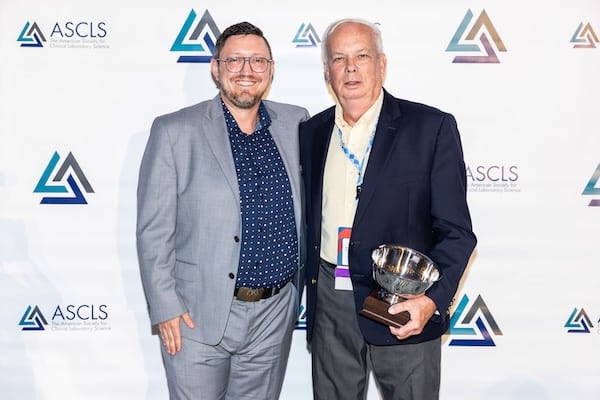
Volume 40 Number 5 | October 2026 Summary ASCLS honored Michael L. Bishop with the 2026 Pinnacle Award for nearly five decades of leadership, innovation, education, and service to the clinical laboratory profession. A dedicated ASCLS leader, educator, inventor, and mentor, Michael’s contributions to laboratory science, workforce development, and patient care have left a lasting…
Volume 40 Number 5 | October 2026 Summary In this article, Tonya Shearin-Patterson highlights the unique burnout risks facing medical laboratory professionals, from staffing shortages and heavy workloads to personal caregiving responsibilities and grief. Drawing from her own experience, she emphasizes the importance of self-care, seeking support, counseling when needed, and proactively protecting mental health…
Volume 40 Number 4 | August 2026 Summary ASCLS Past President Kyle Riding expresses gratitude to laboratory professionals for their persistent and skilled advocacy efforts—”Labvocacy”—which protect high standards, ensure quality patient care, and responsibly guide regulatory and technological changes within laboratory medicine. He emphasizes that such advocacy is a critical, ongoing professional responsibility integral to…
Volume 40 Number 4 | August 2026 Summary The author reflects on the critical role of medical laboratory technologists in patient advocacy through ensuring accurate test results, effective communication with healthcare teams, and upholding professional standards to protect patient safety. She emphasizes that advocacy occurs both at individual and systemic levels in healthcare settings. Eleanor…
Volume 40 Number 4 | August 2026 Summary Medical laboratory professionals play a critical role in patient care by ensuring test results are reliable, meaningful, and appropriately used. This article urges laboratorians to move beyond “test performers” and become consultative partners through clearer communication, diagnostic stewardship, and real-time advocacy that helps clinicians understand test limitations,…
Volume 40 Number 4 | August 2026 Summary This article emphasizes that effective advocacy for laboratory professionals begins with fostering understanding and changing perceptions through authentic conversations and personal interactions. These connections lay the groundwork for policy changes and professional recognition by helping legislators, healthcare administrators, educators, and students appreciate the value and expertise of…
Volume 40 Number 4 | August 2026 Summary Written in the witty voice of Lady Whistledown, this letter discusses the evolving role of laboratory professionals who, traditionally unseen, are increasingly engaging in advocacy to influence healthcare decisions. Lady Whistledown explores the various advocacy roles laboratorians can take on to ensure their voice shapes healthcare policy…
Volume 40 Number 4 | August 2026 Summary Stephanie Noblit, a medical laboratory scientist turned lawyer, applies her scientific expertise in toxicology to her current role in health policy and substance use/addiction law. She bridges the gap between science and law by interpreting drug testing and researching novel psychoactive substances to inform legal and legislative…
Volume 40 Number 4 | August 2026 Summary The article discusses the commonly cited claim that 70 percent of medical decisions are based on laboratory results, tracing its origin to a 1996 article without direct evidence. The author highlights recent studies showing varied percentages and methodological challenges in substantiating this claim, ultimately advocating for citing…