ASCLS Today is the membership newsletter of the American Society for Clinical Laboratory Science.
To submit an article for ASCLS Today, contact Editor Debra Rodahl.
Volume 40 Number 2 | April 2026 Summary The article explores the tension between speed and accuracy in medical laboratory work, especially in hematology, where complex cases demand careful review. While efficiency supports patient care, rushing can risk missed abnormalities. The author reflects on personal experiences, peer insights, and management literature, emphasizing that balancing turnaround…
Volume 40 Number 2 | April 2026 Summary The article explains how validation, verification, quality control, and risk management work together to ensure clinical laboratory safety. Validation confirms a method’s reliability; verification ensures it performs correctly in a specific lab; QC detects ongoing errors; and risk management strengthens procedures—creating a comprehensive system that protects patients,…
Volume 40 Number 2 | April 2026 Summary The article emphasizes that patient safety and ethical practice in laboratory medicine begin in the educational classroom. By integrating safety concepts, quality principles, and ethical decision‑making throughout Medical Laboratory Science and Medical Laboratory Technician curricula, students learn that every specimen represents a patient. Early, consistent training builds…
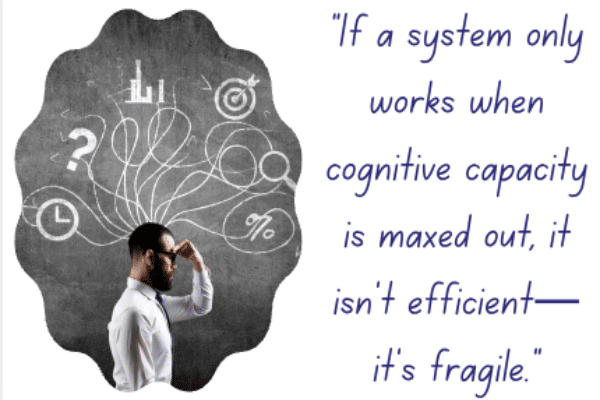
Volume 40 Number 2 | April 2026 Summary The article explains how parallel processing affects medical laboratory work and why errors often stem from cognitive overload rather than individual negligence. Drawing on human factors and neurobiology, it urges root cause analyses to examine system‑imposed cognitive demands, interruptions, and missing supports. Understanding these pressures leads to…
Volume 40 Number 2 | April 2026 Summary The article explains how patient safety, quality, and ethics are deeply interconnected in laboratory medicine. Accurate testing, adherence to procedures, and ethical decision‑making protect patients throughout all testing phases. Real‑world examples show how professionalism guides difficult decisions, while emerging technologies like AI offer benefits but require careful…
Volume 40 Number 2 | April 2026 Summary The article argues that traditional reference intervals based on younger adults often misclassify normal age‑related changes in older patients as disease. Age‑adjusted intervals improve diagnostic accuracy, reduce over diagnosis, and support ethical, patient‑centered care. While challenging to develop, they help prevent harm, reduce anxiety, and promote more…
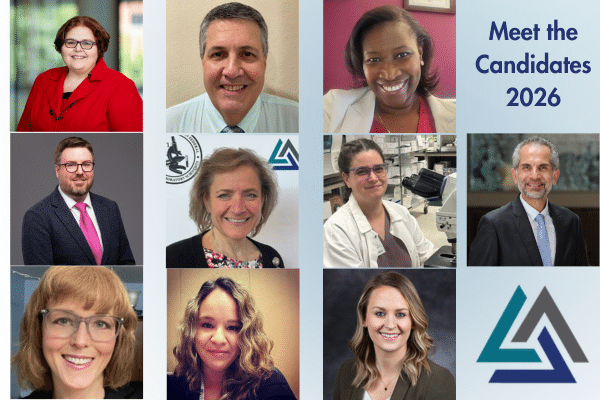
Volume 40 Number 2 | April 2026 The ASCLS Nominations Committee is pleased to present the following candidates for office in the 2026-27 Society year. Candidates selected by ASCLS members will take office during the 2026 ASCLS, AGT & SAFMLS Joint Annual Meeting. Members will elect one president-elect; three 3-year term directors; one 5-year term…
Volume 40 Number 1 | February 2026 Summary The article highlights the vital, often unseen, impact of medical laboratory professionals, illustrated through a multidisciplinary simulation exercise. It emphasizes that their worth comes from life‑saving outcomes, not visibility or external recognition. Lab professionals are encouraged to value their expertise, share their stories, and advocate confidently for…
Volume 40 Number 1 | February 2026 Summary Laboratory professionals may feel unseen, yet their work profoundly impacts patients. Through a story of identifying an abnormal specimen that led to a critical diagnosis, the article highlights how phlebotomists, medical laboratory scientists, and lab assistants make life‑changing differences every day. Even without public recognition, their vigilance…
Volume 40 Number 1 | February 2026 Summary A new medical laboratory technician describes the shock of transitioning from supervised student work to making independent, high‑stakes clinical decisions. Initially overwhelmed by the responsibility, she gains confidence through mentorship and trust from colleagues. The article highlights the emotional weight of becoming a “hidden clinician” and the…