Jeffrey Clifford

Incorporating Professionalism and Ethics into Educational Programs in the Clinical Laboratory Sciences

Volume 40 Number 2 | April 2026 Summary The article explains how the University of Utah’s Medical Laboratory Science program integrates professionalism and ethics throughout its curriculum. Students explore ethical issues early, study codes of ethics, create a class pledge, and revisit ethical expectations before clinical rotations. Interprofessional activities reinforce shared values, preparing graduates for…

The Fine Line

Volume 40 Number 2 | April 2026 Summary The article explores the tension between speed and accuracy in medical laboratory work, especially in hematology, where complex cases demand careful review. While efficiency supports patient care, rushing can risk missed abnormalities. The author reflects on personal experiences, peer insights, and management literature, emphasizing that balancing turnaround…

Christian Baguistan

Ensuring Safety through Validation and Verification

Volume 40 Number 2 | April 2026 Summary The article explains how validation, verification, quality control, and risk management work together to ensure clinical laboratory safety. Validation confirms a method’s reliability; verification ensures it performs correctly in a specific lab; QC detects ongoing errors; and risk management strengthens procedures—creating a comprehensive system that protects patients,…

Phyllis Ingham

Patient Safety and Ethics in Laboratory Medicine

Volume 40 Number 2 | April 2026 Summary The article emphasizes that patient safety and ethical practice in laboratory medicine begin in the educational classroom. By integrating safety concepts, quality principles, and ethical decision‑making throughout Medical Laboratory Science and Medical Laboratory Technician curricula, students learn that every specimen represents a patient. Early, consistent training builds…

"If a system only works when cognitive capacity is maxed out, it isn't efficient—it's fragile"

Parallel Processing, Human Factors, and the Ethics of How We Investigate Error

Volume 40 Number 2 | April 2026 Summary The article explains how parallel processing affects medical laboratory work and why errors often stem from cognitive overload rather than individual negligence. Drawing on human factors and neurobiology, it urges root cause analyses to examine system‑imposed cognitive demands, interruptions, and missing supports. Understanding these pressures leads to…

Dhara Parekh

Patient Safety, Quality, and Ethics in Medical Laboratory Practice

Volume 40 Number 2 | April 2026 Summary The article explains how patient safety, quality, and ethics are deeply interconnected in laboratory medicine. Accurate testing, adherence to procedures, and ethical decision‑making protect patients throughout all testing phases. Real‑world examples show how professionalism guides difficult decisions, while emerging technologies like AI offer benefits but require careful…

Sean Witt

Improving Diagnostic Accuracy and Equity in Older Adults through Age-Adjusted Reference Intervals

Volume 40 Number 2 | April 2026 Summary The article argues that traditional reference intervals based on younger adults often misclassify normal age‑related changes in older patients as disease. Age‑adjusted intervals improve diagnostic accuracy, reduce over diagnosis, and support ethical, patient‑centered care. While challenging to develop, they help prevent harm, reduce anxiety, and promote more…

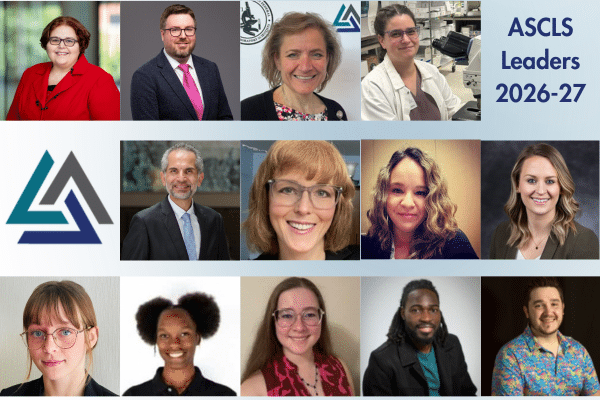
Candidates running for ASCLS office in 2026-27

Society News Now – March 2026

PAMA Reporting Window Opens May 1—What Labs Need to Know | Meet the Candidates for ASCLS National Office | Apply for ASCLS Awards and Scholarships | ASCLS Awards and Scholarships | Volunteer Opportunities | and More PAMA Reporting Window Opens May 1—What Labs Need to Know On Thursday, March 12, the Centers for Medicare and…

Candidates running for ASCLS office in 2026-27

Meet the Candidates 2026

Volume 40 Number 2 | April 2026 The ASCLS Nominations Committee is pleased to present the following candidates for office in the 2026-27 Society year. Candidates selected by ASCLS members will take office during the 2026 ASCLS, AGT & SAFMLS Joint Annual Meeting. Members will elect one president-elect; three 3-year term directors; one 5-year term…

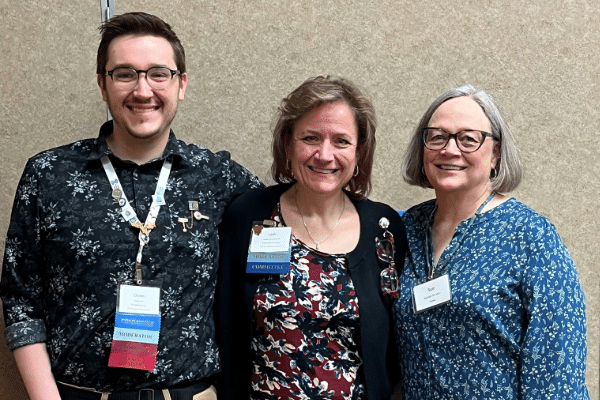
2026 Clinical Laboratory Educators Conference Registration Desk

Society News Now – February 2026

PAMA Cuts Delayed but Advocacy for RESULTS Act Continues | Department of Education Draft Regulations Spark Concern Over “Professional” Degree Definitions | Apply for ASCLS Awards and Scholarships | ASCLS Volunteer Opportunities | and More PAMA Cuts Delayed but Advocacy for RESULTS Act Continues On January 22, Congress passed a bipartisan consolidated appropriations package that…