
Volume 39 Number 2 | April 2025
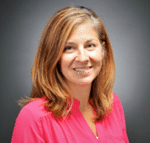
Katrina (Kate) Moreau, MPH, MAT, MLS(ASCP)CM, Patient Safety and Diagnostic Stewardship Committee Chair
 Like many reading this article, I didn’t learn about the field of medical laboratory science until I had already completed an undergraduate degree and embarked on a career path. When I pivoted and began classes for a post-baccalaureate certificate, my “why” was simply to successfully obtain a job in a medical laboratory. It took some time, self-reflection, and experience to go a little deeper and unveil what intrinsically motivated me and identify what my contribution to the profession would be. That introspection has resulted in me being a strong advocate for patient safety by way of awareness, recruitment, and partnerships to support our laboratories.
Looking back, I can pinpoint the life experiences that continue to fuel my drive to unveil the field of medical laboratory science and share it with students of all ages. Those events include my own hospitalization at the age of three for a disease of unknown etiology (there is still no test or known cause for it today!), the loss of a grandparent due to a medical error, and the exposure to rural health care in my little state of Vermont. Without essential biomedical research and test development, well-developed quality assurance programs, and accessible and affordable laboratory tests, the health of our communities would suffer. A well-educated workforce in medical and public health laboratory science has the foundational knowledge and technical skills to make an incredible impact on patient lives, public health, and the healthcare system, and we must continue to celebrate and inform others of the work we do.
“Impactful activities do not need to be grandiose or take a lot of time. Nor does one need to be an educator to raise awareness of the profession.”
As a laboratory professional, I have a duty to the patients, my colleagues, the profession, and to society (see ASCLS Code of Ethics) and have pledged to uphold that duty in several ways, one of which is “ensuring that each patient receives care that is safe, effective, efficient, timely, equitable and patient-centered.” As an educator, it is within the scope of my role to provide outreach, advise students, and mentor individuals. I recently had the privilege of helping several colleagues with a weekend education program for middle school aged youth. A nurse and I led the students through a simulation lab where they could learn about phlebotomy and IVs (don’t worry, no needles were handled by any students!). Together we told them the story of how the samples are collected, are sent to the lab for testing, and how the nurses are awaiting those results to determine next steps. The whole experience for each group lasted about 20 minutes. If even one of the students goes home to share what they learned about the lab, that is a win in my book!
Impactful activities do not need to be grandiose or take a lot of time. Nor does one need to be an educator to raise awareness of the profession. Some examples of how you can make a professional impact and support patients by spreading awareness of the field are:
- Be a mystery reader at school or library program and read a lab-based book
- Visit a middle or high school science class to showcase what you do
- Offer to help at a local career fair
- Host a table in a public place to celebrate Medical Laboratory Professionals Week
- Create a visual tool (video or poster) and share it
- Host an intern
- Volunteer to be a career ambassador with a professional organization
Although we may physically be “behind the scenes,” literally the result(s) of our work is front and center. There are tens of thousands of laboratory professionals across the country who could provide a personal connection and be a face for the laboratory. Imagine the professional impact we would have if each of us volunteered just once a year to showcase the work we do and how it impacts patient lives, public health, and the healthcare system.
Katrina (Kate) Moreau is a Clinical Associate Professor and Program Director for Medical Laboratory Sciences at the University of Vermont (UVM) in Burlington, Vermont.