
Volume 39 Number 5 | October 2025
Summary
Heather Parks reflects on how a colleague used self-help books to overcome burnout and highlights resources that can support healthcare professionals. She reviews several titles, including Self-Care for Allied Health Professionals, Managing Stress, Atomic Habits, and The High Five Habit, alongside podcasts and apps. Parks encourages readers to explore personal strategies to reduce stress, build resilience, and improve wellbeing.
Heather R. Parks, MS, MLS(ASCP)CM, ASCLS Today Volunteer Contributor
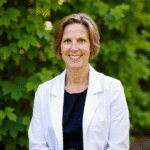 “I like self-help books,” she said with a dazzling smile. This was my more experienced and wiser co-worker I’ll call, “Daphne.” When the topic of reading came up, she always said this.
She eventually told me she had experienced a phase of burnout and anger over job frustrations. Daphne said she was not getting adequate breaks and felt guilty when she did take breaks. Juggling work stress with family responsibilities led her on a path of self-help and reflection. She used her self-help tools to negotiate a better schedule and working conditions, and I could tell she was much happier with her job.
I always remembered these conversations with Daphne. The image of her confident smile still reminds me that empowerment can be as simple as a library visit. I understand we all have unique beliefs and preferences, and deciding on what self-help advice works for you is personal. But if you choose to read on, I’ll share highlights from my recent self-help book exploration.
Self-Care for Allied Health Professionals: from Surviving to Thriving, by Alison Battye
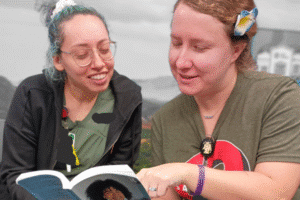
Amanda and Kaitlin read, Self-Care for Allied Health Professionals: from Surviving to Thriving, by Alison Battye.
This small paperback is a gem from the United Kingdom. It contains pretty artwork and short chunks of information. I like how it is geared toward a broad audience of allied health professionals. Although laboratory workers are not specifically named, the book has a cozy, inclusive feel for anyone in healthcare.
Topics include basic care of our own bodies and minds, as well as healthy work environments and dealing with conflict at work. I especially like the frequent “tune in” icons that prompt the reader to tune in to their own feelings and bodily sensations. This book would have been a welcome addition to my textbook collection from MLS school.
Managing Stress: Skills for Self-Care, Personal Resiliency, and Work-Life Balance in a Rapidly Changing World, by Brian Luke Seaward
I found this book in the community college library where I am an adjunct instructor. At this college, we teach and support health science students, and our library has a special collection just for them. This holistic self-care book is my recent favorite.
Managing Stress is a textbook divided into well-researched chapters with colorful photos and cartoons. While scanning the book, I came across a section featuring Elizabeth Kubler-Ross, a Swiss psychiatrist. Dr. Kubler-Ross is famous for her work with patients facing terminal cancer. She describes five stages of grief in her 1969 book On Death and Dying. In reading about the five stages, many were familiar. But the final stage, acceptance, made me pause and reflect. Dr. Kubler-Ross asserts that when people reach the acceptance stage, they are more at peace and matter of fact about how they will proceed.
These grief stages can be applied to other situations (Seaward, 2020). I thought about things I can choose to accept: the hospital cafeteria (which used to be by the core lab) moving to a far part of the hospital; my never-ending to-do list; and missing colleagues who have passed away or moved on. I can accept and reframe the situations: my work is valued and purposeful; I still have many friends at work; and I have a nice corporate-branded lunch bag to pack my own lunch!
Atomic Habits, by James Clear
From the title, I wasn’t sure what to expect. But when I checked it out at the library, I was surprised. The author suffered a severe head injury in high school. His dreams of playing professional baseball were no longer practical. However, little by little, he improved his health and skills enough to play baseball in college (Clear, 2018).
The numbers presented in this book are thought-provoking: how tiny habits done consistently can add up in a lifetime. There are many self-help books on healthy habits and habit change, but this one I found particularly inspiring. Atomic habits in the lab could look like double-checking specimen labels, a one-minute instrument wipe-down, and offering to cover a co-worker’s break. These small actions might lead to better patient care and improved staff morale.
The High Five Habit, by Mel Robbins
When I asked friends about their favorite self-help gurus, many people mentioned Mel Robbins. I was familiar with a few of her videos, so I tried her podcast. The first one was advice for twenty-somethings finding their place in the world. This podcast had me laughing and smiling. Mel, I wish I had listened to you in my 20s! Alas, we were both in our 20s then.
I also checked out her book, The High Five Habit. What a fun idea: to give yourself a high-five in the mirror! I tried it and felt silly, but it really did boost my confidence for the day. Mel’s advice about self-gratitude is so comforting.
Beyond the Page
There are so many great self-help podcasts, videos, apps, and websites out there. My personal favorites are the Calm app, the Happier with Gretchen Rubin podcast, The Savvy Psychologist podcast, Therapy in a Nutshell YouTube videos, and Dr. Tracey Marks YouTube videos. Friends I polled mentioned the apps Calm, Wysa, and Growthday. Recommended podcasts included The School of Greatness, The Minimalists, and the Jay Shetty Podcast.
Speaking of podcasts, our own ASCLS Off the Bench podcast offers stress-relieving laughs and a fun feeling of community. eLABorate Topics is another lab-focused podcast offering inspirational and personal growth slant.
We have numerous self-help resources available to help with job stress and burnout. Choose what works for you. By the way, I do not have a commercial interest in any of the resources mentioned. As for Daphne, the image of her “self-help book” smile sticks with me as I navigate work and life. I’m curious: what are your favorites? Email me!
References
- Battye, A. (2021). Self-care for allied health professionals: From surviving to thriving.
- Clear, J. (2018). Atomic habits: An easy & proven way to build good habits & break bad ones. https://catalog.umj.ac.id/index.php?p=show_detail&id=62390
- Robbins, M. (2023). The high 5 habit: Take control of your life with one simple habit. Hay House, Inc.
- Seaward, B. L. (2020). Managing stress: Skills for self-care, personal resiliency and work-life balance in a rapidly changing world. Jones & Bartlett Learning.
Heather Parks is a Medical Laboratory Scientist at University Hospital, San Antonio, Texas, and is Adjunct Biology Instructor at San Antonio College.