
Volume 40 Number 1 | February 2026
Summary
The author traces her path from clinical laboratory scientist to educator, made possible by federally supported graduate funding. She warns that new federal loan limits could restrict access to advanced degrees, shrinking the pipeline of laboratory educators, harming workforce stability, and threatening the future of clinical laboratory science education.
A Journey Made Possible by Graduate Funding and Why it is at Risk
Letycia Nuñez Argote, PhD, MPH, CPH, MLS(ASCP)CM, ASCLS Today Volunteer Contributor
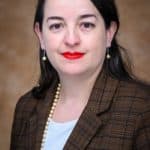 When describing my professional identity, I am proud to say I am a medical laboratory science professional, educator, and researcher. I was fortunate to have my start as a medical laboratory scientist fresh out of college, having received a Bachelor of Science in Clinical Laboratory Science. Working in the clinical laboratory I gained practical experience, served clinicians and patients, and made enough money to pay back my student loans.
Once my basic needs were met (i.e., health, safety, income), my inquisitive brain began to wander looking beyond the clinical laboratory for other ways to grow. Fast-forward five years, I completed a graduate degree in public health, which opened the door for my current role as an educator. Teaching clinical immunology (and some blood bank and hematology) to medical laboratory science students became my purpose and my source of joy, and I did it for 10 amazing years. Now my focus is on research that informs the clinical laboratory’s work environment and its impact on laboratory personnel.
Finding my passion as an educator would not have been possible without graduate education, and I was only brave enough to enroll in a master’s degree because I received support from a government program. This is why I am genuinely concerned to learn that on July of 2026, as directed by Congress in the “One Big Beautiful Bill” (OBBB) Act, the U.S. Department of Education (ED) will change the way students access graduate education funding. And this enactment of limits on borrowing for graduate degrees could make it difficult for many medical laboratory science professionals to refocus their passion for clinical laboratory science into higher education or advanced practice careers. It could have dire consequences for educational programs in the clinical laboratory sciences (CLS) and the laboratory workforce.
“Finding my passion as an educator would not have been possible without graduate education, and I was only brave enough to enroll in a master’s degree because I received support from a government program.”
What is in the Bill?
The OBBB Act sets lending limits for students seeking graduate degrees at $100,000 and at $200,000 for a list of specific doctoral and professional degrees (ASCP, 2025; U.S. Department of Education, 2025). “Professional” degree programs must show graduates are prepared to begin practicing in a specific licensed profession, require skills beyond a bachelor’s level, be a doctoral degree (except for a Master’s in Divinity), involve at least six years of academic study with two years post-baccalaureate, and fall under the same four-digit Classification of Instructional Programs code as one of the professions listed in the regulation (Blake, 2025a).
The specified professions are Pharmacy (PharmD), Dentistry (DDS or DMD), Veterinary Medicine (DVM), Chiropractic (DC or DCM), Law (LLB or JD), Medicine (MD), Optometry (OD), Osteopathic Medicine (DO), Podiatry (DPM, DP, or Pod.), Theology (MDiv., or MHL), and any other degrees designated by the Secretary of the ED through rulemaking (H.R. 1, 119th Cong., 2025). For example, Clinical Psychology (PhD or PsyD) was added to this list by the ED. The highest loan limits of $50,000 per year are meant for “professional” graduate degrees, and “non-professional” degrees will have a limit of $20,500 per academic year in direct, unsubsidized loans (Blake, 2025b). The ED is tasked with rulemaking to enact this legislation before July of 2026 (Bruise, 2025).
How Can this Affect Access to Education for Medical Laboratory Science Professionals?
Medical laboratory science educators represent between 2,500 and 3,000 faculty distributed among the more than 600 National Accrediting Agency for Clinical Laboratory Sciences (NAACLS)-accredited educational programs in CLS in the United States (NAACLS, 2023). While many hospital-based laboratory training programs hire instructors who possess a bachelor’s degree, most college- and university-based programs rely on certified professionals with master’s degrees or higher as faculty and as program directors (Duzan, et al, 2025a; Duzan et al, 2025b). This data echoes my entry into academia. It was thanks to my having completed a master’s degree that I was hired as assistant professor at a CLS educational program. And many of the talented laboratory faculty I have met also got their start after completing a master’s degree or by completing a master’s and/or doctoral degree while teaching.
Graduate degrees that enable medical laboratory science professionals to work in higher education are not cheap, and the changes prompted by the OBBB legislation will disproportionately affect non-traditional students and those pursuing advanced degrees, reducing access to affordable financing. For example, looking at four of the Master of Medical Laboratory Science programs, the cost is, on average, $35,000 per year, with the lower-end expense at $16,000 for in-state, public tuition and the higher-end at $60,000 at private institutions (Rush, 2025; UND, 2025; UTHS, 2025; UV, 2025). The estimated cost of Doctor of Clinical Laboratory Science (DCLS) programs can be as low as $9,900 and as high as $35,600 per year (KU, 2025; Rutgers, 2025; UTMB, 2025).
And, unlike research doctorates, such as traditional Doctor of Philosophy degrees, professional degrees rarely offer stipends. Fields such as advanced master’s and doctorates in nursing, physician assistant, social work, occupational therapy, physical therapy, public health, and of course DCLS, are meant for professionals who wish to advance their knowledge in specialized fields within healthcare. Many students in these programs are adults with families and financial obligations, making higher loan caps essential for housing, childcare, and relocation costs. For instance, in 2021, of the 1,976,426 registered nurses whose entry into the profession was a bachelor’s degree, 17.3 percent obtained a master’s and 2.9 percent a doctorate degree, and 50.8 percent of all registered nurses said they had borrowed money to finance their initial nursing degree, an additional nursing degree, or both (NCHWA, 2024). And female-dominated fields like the above listed health professions will be hit hardest as women already carry more educational debt and earn less than men, risking a widening in pay gaps (NCES, 2023).
A press release from the ED states that “loan limits will help drive down the cost of graduate programs and reduce the debt students have to take out” (U.S. Department of Education, 2025). But cuts to funding are unlikely to reduce the cost of graduate programs in the immediate future. It is more likely that these cuts will mean fewer federal dollars for college and graduate degrees which may result in either an uptick in the use of private loans, which are less favorable for students, or in students foregoing higher and graduate education altogether (ASCP, 2025). Reduced graduate enrollment will slow the pipeline for laboratory specialists and educators, leading to more vacancies and longer hiring times, creating a domino effect that can reduce the size of laboratory training programs due to lack of faculty to support them. The changes currently underway have the potential to shrink the talent pipeline for laboratory services, harm diversity, and equity efforts, and weaken the laboratory workforce.
What Can We do about It?
Because clinical laboratory education has been such a central part of my life, I feel an obligation to speak up and take a stand. I want to advocate for the inclusion of graduate healthcare and professional degrees that help sustain our CLS education programs by allowing needy students to access funds from the federal government. I support the call to action by professional groups that have urged the ED to provide clear guidelines on the definition of “professional degree programs”; one that considers any master’s or doctoral degree required for licensure or certification in health professions (Benjamin, 2025; ASCP, 2025; ASHAP, 2025). And I hope ASCLS leadership includes this item in its advocacy agenda and, when called to, provides tools for members to comment and support the inclusion of the DCLS and other master’s and doctoral healthcare training as “professional” degrees.
Professional education is “formal education and training in preparation for the practice of a profession” (NLM, 2025). People who wish to join health professions traverse a handful of pipelines, and knowledge of these pipelines as a starting point is related to professional visibility and access to career pathways. I did not know my path would lead to education. But the option was there, and I was fortunate to find it. The joy I felt as a clinical laboratory educator would not have been possible without government support and the ability to afford graduate training. Laboratory educators are pillars of our profession and making sure every medical laboratory science professional who aspires to serve as an educator can do so is worth advocating for.
Acknowledgements
I want to thank my professors, who taught me well and helped me become who I am today. Also thank you to all the faculty in educational programs in the clinical laboratory sciences. And a shoutout to Perry Scanlan, PhD, MLS(ASCP), and Stephanie Noblit, Esq., MLS(ASCP)CM, for their feedback while I was working on this article. I appreciate you both for your leadership, advocacy, and for how much you care about the laboratory profession.
References
For a complete list of references, please visit: https://docs.google.com/document/d/1X1nz_iiqgn19Nqlaguu-yqSt07Gxw_fwHfYh8JbhhQM/edit?usp=sharing.
Letycia Nuñez Argote is Associate Professor at North Carolina Agricultural and Technical State University in Greensboro, North Carolina.