
Empower the Next Generation of Medical Laboratory Professionals

Resources, tools, professional development, and community designed specifically for clinical laboratory educators.

FEATURED EVENT

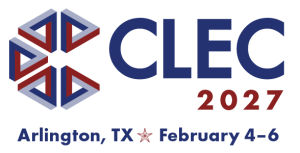
2027 Clinical Laboratory Educator Conference (CLEC)

February 4-6 | Arlington, Texas | Virtual

Advance Your Career

CLEC 2027, Arlington, Texas, February 4-6

Register by December 2 and save!

Find

Find Your Community

2026 Clinical Laboratory Educators Conference attendees, Feb 5-7 in Bellevue, WAThe Clinical Laboratory Educators Forum (CLEF) engages and facilitates the involvement and interest of clinical laboratory educator members in this Society. Any ASCLS member can elect to join the CLEF.

The CLEF Online Community is a dedicated space for educators to connect with peers who understand the challenges and opportunities of clinical laboratory education programs. Exchange ideas, discuss teaching strategies, share best practices, seek advice on program management, and build relationships with educators across the laboratory community.

Activities of the Forum include:

  • Assessing current trends in educational programs
  • Supporting the professional development of educators
  • Developing career recruitment materials for use with precollege, undergraduate, and graduate students

The online community has additional resources available for educators, including examples of simulation activities and course documents.

CLEC 2027, Arlington, Texas, February 4-6

2026 Clinical Laboratory Educators Conference attendee, Feb 5-7 in Bellevue, WA

Clinical Laboratory Educators Conference (CLEC)

February 4-6, 2027

Register by December 2 and Save

CLEC is the most impactful annual gathering for faculty, administrators, directors, advisers, and others in medical laboratory education. Content experts present a wide range of timely topics, providing you with the knowledge and skills to navigate the evolving landscape of clinical laboratory education.

This conference includes peer-to-peer learning through shared personal experiences, designed to give you take-aways that you can bring home and implement in your program.

  • Explore new ways to enhance the student learning experience
  • Adapt your content for new learning methods and delivery systems
  • Discover innovative teaching techniques
  • Guild a strong network of peers in education
  • And so much more!
Advance Your Career as an Educator

Learn

Learn

ONLINE COURSES

ASCLS Labucate logo

Access webinars, online courses, and session recordings from live events through ASCLS Labucate. All are offered for P.A.C.E.® credit, and some content is free for ASCLS members.

Browse the Full List of Education Courses

Laboratory Educator Institute

This online institute assists with professional development in critical areas that include education/teaching, administration/leadership, clinical practice, and research. Developed by ASCLS education experts, the courses will:

  • Provide educators with skills and knowledge to effectively develop and implement courses and provide assessments.
  • Develop more effective laboratory science educators and program administrators.

ASCLS is an approved provider of continuing education by the ASCLS P.A.C.E.® program. P.A.C.E. is accepted by the Board of Certification (BOC) Credential Maintenance Program and all licensing states, including California and Florida.


Do you have expertise to contribute to the online Laboratory Educator Institute? Submit a proposal today.

Laboratory Educator Institute

Achieve Teaching and Academic Excellence
ARTICLES
Phyllis Ingham

Advocacy Begins in the Classroom

Volume 40 Number 4 | August 2026 Summary Advocacy in laboratory medicine begins in educational settings where educators foster professional pride, understanding of the profession’s impact on healthcare, and leadership skills. With encouragement, students become ambassadors who promote the value of laboratory professionals, participate in recruitment, and engage with the broader professional community to address…
Read more
Stephanie Cochrane

Teaching the Next Generation to Think Like Diagnosticians

Volume 40 Number 3 | June 2026 Summary This article argues that medical laboratory education must evolve beyond memorization to emphasize diagnostic reasoning. It highlights the importance of case-based learning, simulation, and reflective practices to develop analytical thinking. By fostering pattern recognition, clinical interpretation, and confidence, educators can better prepare students to contribute meaningfully to…

Read more
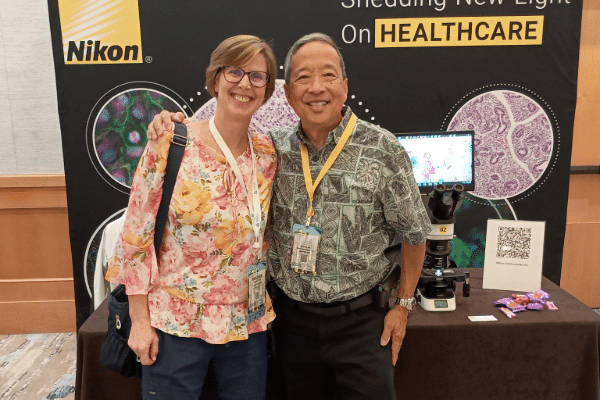
Heather Parks and Terence Au

Mindful Moments from CLEC

Volume 40 Number 3 | June 2026 Summary This reflective piece highlights the author’s experience at the Clinical Laboratory Educators Conference (CLEC), emphasizing professional growth through education, connection, and shared challenges. The author underscores the value of community, practical learning, and collaboration, noting how CLEC inspires educators and reassures them that common challenges can be…

Read more
Jeffrey Clifford

Incorporating Professionalism and Ethics into Educational Programs in the Clinical Laboratory Sciences

Volume 40 Number 2 | April 2026 Summary The article explains how the University of Utah’s Medical Laboratory Science program integrates professionalism and ethics throughout its curriculum. Students explore ethical issues early, study codes of ethics, create a class pledge, and revisit ethical expectations before clinical rotations. Interprofessional activities reinforce shared values, preparing graduates for…

Read more
Phyllis Ingham

Patient Safety and Ethics in Laboratory Medicine

Volume 40 Number 2 | April 2026 Summary The article emphasizes that patient safety and ethical practice in laboratory medicine begin in the educational classroom. By integrating safety concepts, quality principles, and ethical decision‑making throughout Medical Laboratory Science and Medical Laboratory Technician curricula, students learn that every specimen represents a patient. Early, consistent training builds…

Read more
Stephanie Cochrane

Beyond the Classroom

Volume 40 Number 1 | February 2026 Summary Clinical laboratory science educators create a lasting impact beyond the classroom by shaping students’ diagnostic reasoning, professional communication, and commitment to patient safety. Through innovative pedagogy, mentorship, and workforce pipeline support, their choices ripple into stronger clinical practice, improved patient outcomes, and a more resilient profession, multiplying…

Read more
Letycia Nuñez Argote

Becoming a Clinical Laboratory Educator

Volume 40 Number 1 | February 2026 Summary The author traces her path from clinical laboratory scientist to educator, made possible by federally supported graduate funding. She warns that new federal loan limits could restrict access to advanced degrees, shrinking the pipeline of laboratory educators, harming workforce stability, and threatening the future of clinical laboratory…

Read more

Tools

Teaching & Curriculum Tools

Entry Level Curriculum

Build a Strong MLS or MLT Curriculum

The Entry Level Curriculum (ELC) was created by laboratory educators and practitioners using the Body of Knowledge, which is also published by ASCLS.

The MLS and MLT entry-level curricula are defined as the knowledge and skills expected of a new graduate upon successful completion of a formal educational program. It assumes no work experience other than that required as part of a clinical education affiliated with the program.

The curriculum format is delineated by discipline area within the MLS and MLT levels. Each discipline area is further delineated by major topics with learning objectives and taxonomic levels.

Clinical laboratory science lab classroom

Clinical Laboratory Education

Prepare for a Teaching Role

Clinical Laboratory Education, by Susan J. Beck, PhD, MLS(ASCP)CM, and Vicky A. LeGrys, DA, MT(ASCP), helps prepare clinical laboratory students or professionals for a wide variety of teaching roles. It is a valuable resource for students and educators.

Body of Knowledge

Purchase a Copy

The Body of Knowledge (BOK) 4th edition serves as a resource for non-medical laboratory professionals—including clinicians, nurses, pharmacists, therapists, patients, caregivers, interprofessional teams, public health officials, and policymakers—to better understand the role of medical laboratory professionals in healthcare. The BOK should also be used by medical laboratory educators, medical laboratory leaders, human resource managers, government agency officials, and workforce development personnel, providing succinct information for those involved in education, hiring, consultation, regulatory compliance, and related activities.

Depending on your needs, you can purchase a single user license (licensed to the single user who purchased it) or an institutional license (licensed exclusively to the institution that purchased it).

Educational Session Recordings

Need additional content for your courses? Or is there an ASCLS session that you want your colleagues to view? Recordings from ASCLS meetings (including the Joint Annual Meeting and Clinical Laboratory Educators Conference) and the ASCLS monthly webinars are available for group purchases or licensing at a discounted rate. Email ascls@ascls.org for details.

Person taking notes near a laptop

Labvocacy Curriculum Toolkit

The annual Labvocate Symposium (formerly the Laboratory Legislative Symposium) is held annually to provide up to the minute information on legislative and regulatory issues impacting the laboratory profession. Attendees learn about the legislative process and how to talk to congressional representatives.

ASCLS Developing Professional members can attend the Labvocate Symposium virtually at no cost. The Clinical Laboratory Educators Forum developed a sample curriculum for educators who want to leverage this opportunity for their students.

Labvocate

ASCLS Store

The ASCLS Store has a variety of educational products available for purchase, including Image Atlases and ASCLS Swag.

online shopping

Student Support

Program

Educational Program Resources

Lambda Tau SealASCLS is pleased to offer the Lambda Tau Honor Society, providing services to support the longtime purpose of Lambda Tau and for expansion to the broadest possible range of educational institutions.

It is the purpose of Lambda Tau:

  • to develop a spirit of cooperation and unity among the students entering any of the fields encompassed by medical laboratory science
  • to stimulate a higher ideal for scholastic effort, to encourage research, and to help develop the professional character of the work itself
  • to interest other students in these fields; to determine and make known the requirements of hospitals and other institutions offering approved education
  • to become better acquainted with medical biology and the workers in these fields in order to receive the benefit of mutual discussions and associations with fellows of common interests.

Association of Medical Laboratory Educational Programs (AMLEP)The Association of Medical Laboratory Educational Programs (AMLEP) was formed for the purpose of facilitating and encouraging collaboration, cooperation, and communication among medical laboratory educational programs.

AMLEP advances the quality of medical laboratory education through involvement in academic, clinical, and regulatory issues which affect medical laboratory education and practice. AMLEP also advocates for the interests of medical laboratory education programs and students with respect to administration, accreditation, education, practice, and public policy issues.

The Doctorate of Clinical Laboratory Science (DCLS) is an advanced professional doctorate designed for practicing CLSs who wish to further their level of clinical expertise and to develop leadership and management skills.

The DCLS Tool Kit provides information that will assist educators who are in the process of considering and/or planning a DCLS degree program at their institution. The information presented consists of documents developed by the DCLS Oversight Committee and vetted by ASCLS and/or NAACLS, as well as additional information that can be useful in the new program development process.

The Clinical Laboratory Educators Forum (CLEF) of ASCLS maintain directories for prospective students who are considering online programs at the associate, bachelor, or graduate level.

ASCLS group membership allows programs to enroll faculty, students, and staff under one package with additional benefits:

  • Recruit at least six members (including one Professional) to join the package, and you’ll receive one 50% off Clinical Laboratory Educators Conference (CLEC) early bird registration.
  • Recruit at least 12 members (including two Professionals) to join, and you get one free CLEC early bird registration.
  • Save money on membership dues, too, and only pay the renewal rate.

The Board of Certification (BOC) is an administratively independent certification agency that prepares relevant standards and develops procedures that will assure the competence of medical laboratory personnel. The BOC certifies those individuals who meet the academic and clinical prerequisites and who achieve acceptable performance levels on examinations.

The National Accrediting Agency for Clinical Laboratory Science (NAACLS) is an international agency for accreditation and approval of education programs in the clinical laboratory sciences and related health care professions.